
Calories & Alcohol
World Series Calories: How Quickly Do Beer and Ballpark Food Add Up?
· 7 min read · By CalDrop
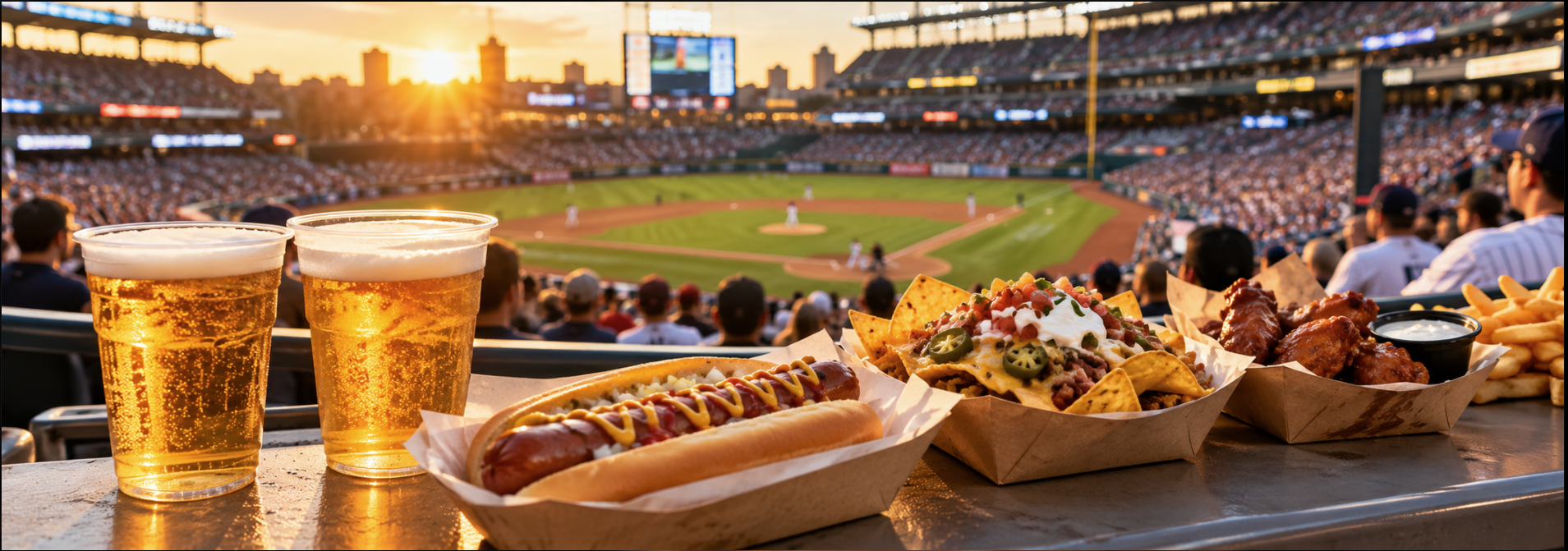
Game 1 of the 2026 World Series is scheduled for Friday, October 23. For a lot of fans, that means a long night: pregame, nine innings, maybe extra innings, and plenty of time to eat and drink along the way.
None of that is a problem. But when the snacking and drinking are spread over three or four hours, it is easy to lose track. So how quickly can a normal World Series night of beer and game-day food add up?
World Series night: the calories you don't notice
A game is not one meal. It is a beer during warmups, a hot dog in the third, something to share in the sixth and another round when the game gets tight. Each choice feels small on its own, and nobody is adding them up while the bases are loaded.
That is the whole point of this article. Not to tell you what to skip, just to show how the pieces fit together over a full game.
Beer calories add up
Beer contains calories, and so does every other alcoholic drink. There is no single number for "a beer," though. The calories in your cup depend on:
- serving size, since a 12 oz can and a 24 oz stadium cup are very different drinks
- alcohol percentage, because alcohol itself carries energy
- beer style, from light lagers to IPAs and stouts
- ingredients, including any leftover sugars and carbohydrates
As a rough estimate, a regular 12 oz beer often lands somewhere around 150 calories, with light beers lower and stronger craft beers higher. Check the label or the brewer's information for the drink you actually have. Over a full game, two, three or four drinks can quietly become one of the biggest parts of the night.
Then there's the food
Ballpark food is part of the experience. The usual lineup includes:
- hot dogs
- nachos
- burgers
- fries
- pizza
- wings
Calories for these vary a lot depending on the recipe, the portion and how they are cooked. A plain hot dog and a loaded one with chili and cheese are not the same food, and stadium portions are often larger than what you would make at home. If a stadium or vendor posts nutrition information, that is the best number to use.
The combination matters
Here is one example of how a fairly normal game night could look when you put it all together.
Depending on the night, that can be a large share of a typical day's calories, and it may come on top of dinner before the game. The biggest surprise for many people is how much of the total comes from what they drank.
What does research say about drinking calories?
Researchers at the University of Toronto looked at what happens when caloric drinks are served with a meal. Young adults ate a meal they could have as much of as they liked, with a drink such as water, milk, orange juice or regular cola. Participants did not eat less food to make up for the calories in the caloric drinks, so total calories at the meal were higher than with water.
That study tested drinks like milk, juice and cola, not beer, so it does not tell us exactly what happens at a ballgame. It does show that calories from a drink served alongside food can simply add to the meal.
The wider picture is more mixed. A review by researchers at the University of Washington asked how strong the evidence is that liquid calories are less filling than solid food. It found the evidence was not completely consistent: some studies showed weaker satiety from liquids, and others did not. Things like a drink's composition, volume and how quickly it is consumed may matter too.
Alcohol isn't "free" energy
Alcohol provides energy, about 7 calories per gram, and that energy counts toward your total intake like anything else you eat or drink. A review by Martin Yeomans at the University of Sussex noted that alcohol calories tend not to be offset by eating less, and that in some controlled studies food intake increased after alcohol. Results vary between studies and between people, so this does not mean drinking automatically leads to weight gain or always makes you eat more.
Enjoy the World Series, just see the whole picture
You don't need to skip the beer. You don't need to skip the hot dog. You don't need to turn watching baseball into a diet.
Awareness comes first. Knowing what you drank and ate during the game gives you a clearer picture of your overall habits, and that makes any choices you want to make afterward much easier.
This article is for general information and is not medical or nutritional advice. If you have specific health concerns, talk to a qualified healthcare professional.
Research & Sources
- University of Toronto. Panahi S, El Khoury D, Luhovyy BL, Goff HD, Anderson GH. Caloric beverages consumed freely at meal-time add calories to an ad libitum meal. Appetite. 2013;65:75–82. DOI: 10.1016/j.appet.2013.01.023
- University of Washington. Almiron-Roig E, Chen Y, Drewnowski A. Liquid calories and the failure of satiety: how good is the evidence? Obesity Reviews. 2003;4(4):201–212. DOI: 10.1046/j.1467-789x.2003.00112.x
- University of Sussex. Yeomans MR. Alcohol, appetite and energy balance: is alcohol intake a risk factor for obesity? Physiology & Behavior. 2010;100(1):82–89. DOI: 10.1016/j.physbeh.2010.01.012
Event information: Major League Baseball, MLB announces 2026 Postseason schedule.