
Calories & Alcohol
NFL Game Day Beer Calories: How Much Does a Sunday of Football Really Add?
· 7 min read · By CalDrop
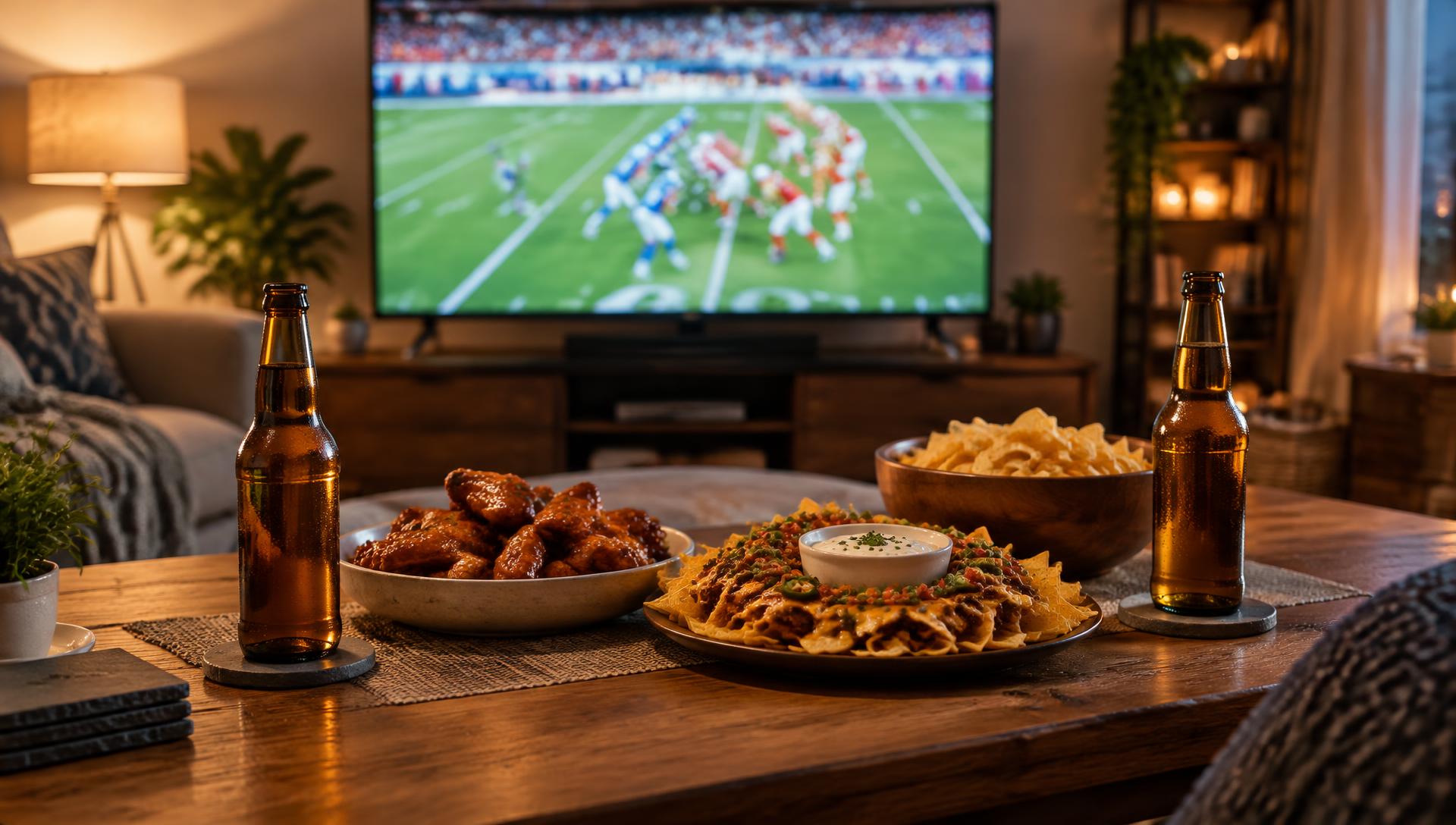
An NFL Sunday is not one meal. It is kickoff at one o'clock, a second game, maybe a night game, and hours of snacking in between. Beer, wings, nachos and chips are part of the ritual, and nobody is counting while the game is on.
So how much does a typical game day actually add? Here is an honest look at the numbers, and what research says about eating and drinking in front of football.
Beer is the quiet constant
Beer is the default drink of football Sunday. In a Nielsen survey of Americans aged 21 and over ahead of Super Bowl 50, 53 percent said they planned to drink beer during the game, more than any other alcoholic drink.
There is no single calorie number for "a beer." A regular 12 oz beer often lands somewhere around 150 calories, with light beers lower and stronger craft beers higher. What matters on game day is the multiplication: one beer per quarter is four beers, and four regular beers is roughly 600 calories before any food arrives.
Game day food does the rest
The usual lineup needs no introduction:
- chicken wings
- nachos
- chips and dip
- pizza
- sliders and hot dogs
Calories vary a lot with recipe and portion, so treat any single number as an estimate. The pattern that matters is grazing: game day food is eaten slowly over three or four hours, which makes it very easy to eat far more than you would at a normal meal without ever feeling like you had "a big dinner."
One example game day
Here is how a fairly ordinary Sunday of watching football could look when you put it together.
That range is close to a full day's calories for many adults, and it can come on top of whatever else was eaten that day. Surveys paint a similar picture: in one 2025 poll of 1,200 NFL fans, respondents reported consuming an average of about 2,900 calories while watching the Super Bowl. Self-reported surveys like that are imprecise, but they point the same direction.
Do people actually drink more during the big game?
Researchers at the University at Buffalo followed adults with risky drinking patterns across three Super Bowl Sundays and compared their drinking with the surrounding Saturdays, normally the heaviest drinking day of the week. Men drank more on Super Bowl Sunday in all three years studied; women's drinking was higher in only one of the three years. The study involved at-risk drinkers, so it does not describe the average fan, but it shows the event itself can push drinking up.
Losing makes it worse
A study published in Psychological Science tracked what NFL fans ate on the Mondays after games. After their team lost, fans ate about 16 percent more saturated fat than usual. After a win, they ate about 9 percent less. The researchers called it "vicarious losing": the result of the game changes what fans eat the next day, without them noticing.
In other words, a rough Sunday for your team can echo into Monday's meals too.
Alcohol isn't "free" energy
Alcohol provides about 7 calories per gram, and those calories count toward your daily total like anything else. A review by Martin Yeomans at the University of Sussex noted that alcohol calories tend not to be offset by eating less, and that in some controlled studies people actually ate more after drinking. Results vary between studies and between people, so this does not mean a beer automatically leads to weight gain.
Enjoy the game, just see the whole picture
You don't need to skip the wings. You don't need to switch to water. You don't need to turn football into a diet.
Awareness comes first. Knowing roughly what a game day adds gives you a clearer picture of your week, and that makes any choices you want to make much easier.
This article is for general information and is not medical or nutritional advice. If you have specific health concerns, talk to a qualified healthcare professional.
Research & Sources
- University at Buffalo, State University of New York. Dearing RL, Twaragowski C, Smith PH, Homish GG. Super Bowl Sunday: Risky Business for At-Risk (Male) Drinkers? Substance Use & Misuse. 2014;49(10):1359–1363. PMC4183053
- INSEAD. Cornil Y, Chandon P. From Fan to Fat? Vicarious Losing Increases Unhealthy Eating, but Self-Affirmation Is an Effective Remedy. Psychological Science. 2013;24(10):1936–1946. DOI: 10.1177/0956797613481232
- University of Sussex. Yeomans MR. Alcohol, appetite and energy balance: is alcohol intake a risk factor for obesity? Physiology & Behavior. 2010;100(1):82–89. DOI: 10.1016/j.physbeh.2010.01.012
Additional reporting: ABC News, Super Bowl 50: What Americans Will Be Eating and Spending (Nielsen survey); Austin American-Statesman / USA TODAY Network, Poll: NFL fans eat over 3,400 calories during the Super Bowl.