
Calories & Alcohol
How Many Calories Are in Australia's Most Popular Beers?
· 6 min read · By CalDrop
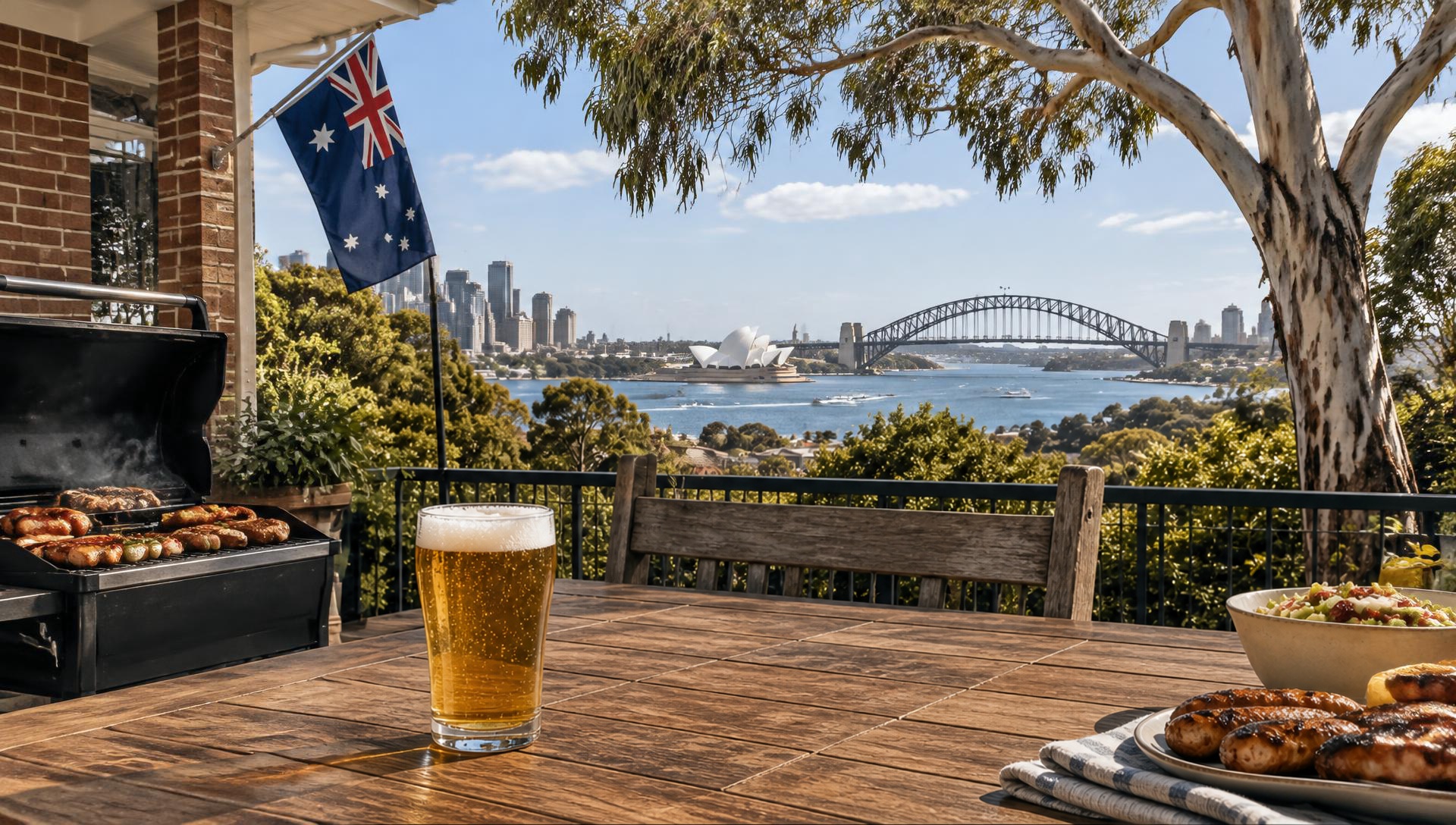
Short answer: a 375 mL serving of XXXX Gold has 109 calories and Tooheys New has 142, according to their brewers. Coopers lists 150 for Australian Lager and 91 for Dry 3.5. The exact beer and amount poured matter more than the brand name alone.
Looking up beer calories in Australia can be confusing: labels may use kilojoules, bottles are not always the same size, and a schooner means different things in different states. This guide separates manufacturer-published figures from calculated pub-pour estimates.
This is a comparison of familiar Australian brands, not a verified national sales ranking. We have not ranked Australian beer sales. Product information was checked on 4 November 2026; your current can or bottle label takes precedence.
Australian beer calories: verified 375 mL comparison
These are the manufacturers' declared average quantities for 375 mL. Calories means kilocalories (kcal); ABV is alcohol by volume. We preserve the brewers' displayed figures, including rounding, rather than substituting third-party database values.
| Beer | Energy (kJ) | Calories (kcal) | Carbs (g) | ABV |
|---|---|---|---|---|
| XXXX Gold | 454 | 109 | 7.1 | 3.5% |
| Tooheys New | 592 | 142 | 9.2 | 4.6% |
| Coopers Australian Lager | 630 | 150 | 8.6 | 4.2% |
| Coopers Dry 3.5 | 383 | 91 | 2.6 | 3.5% |
Tooheys New's label lists 9.2 g of carbohydrate per 375 mL and 2.5 g per 100 mL. Rounded columns do not always scale back exactly; the declared serving figure is used above.
Great Northern calories: Original is not Super Crisp
Great Northern's official range lists Original at 4.2% ABV and Super Crisp at 3.5% ABV. They are different beers, so a calorie entry for one should not be used for the other.
CUB's manufacturer table updated 10 March 2021 listed Original at 31 kcal and 1.7 g of carbohydrate per 100 mL, and Super Crisp at 27 kcal and 1.4 g per 100 mL. Those are verified historical figures, not newly verified 2026 nutrition panels. The table below shows the original figures and clearly labelled 375 mL calculations.
VB calories and Carlton Draught calories: dated manufacturer figures
CUB's 10 March 2021 table listed regular Victoria Bitter at 40 kcal, 3.1 g of carbohydrate and 4.9% ABV per 100 mL; Carlton Draught was listed at 37 kcal, 2.7 g and 4.6% ABV. The old manufacturer URL now redirects, but the original PDF can be read in the Internet Archive.
We could not verify replacement current nutrition panels. Do not treat this 2021 sheet as confirmation of today's formulation. Regular VB and VB Low Carb are distinct products, and the figures below are for regular VB.
Historical CUB comparison — manufacturer data dated 10 March 2021
The per-100-mL energy, carbs and ABV are copied from that dated manufacturer sheet. The 375 mL calories and carbs are estimates calculated by multiplying its published per-100-mL kcal and carbs by 3.75; calories are rounded to a whole number and carbs to one decimal. They are not current pack declarations.
| Beer (2021 data) | kJ / 100 mL | kcal / 100 mL | Carbs g / 100 mL | ABV (2021) | Est. kcal / 375 mL | Est. carbs g / 375 mL |
|---|---|---|---|---|---|---|
| Great Northern Original | 130 | 31 | 1.7 | 4.2% | Approx. 116 | Approx. 6.4 |
| Great Northern Super Crisp | 112 | 27 | 1.4 | 3.5% | Approx. 101 | Approx. 5.3 |
| Victoria Bitter (regular VB) | 169 | 40 | 3.1 | 4.9% | Approx. 150 | Approx. 11.6 |
| Carlton Draught | 155 | 37 | 2.7 | 4.6% | Approx. 139 | Approx. 10.1 |
How many calories are in a schooner or middy?
A 375 mL can is not the same amount as a pub glass. The Australian Government's standard-drinks guide uses 285 mL for a small glass and 425 mL for a large glass. A middy or pot commonly refers to 285 mL, while a schooner commonly refers to 425 mL outside South Australia. Names vary locally: in South Australia, a schooner is commonly 285 mL and a “pint” 425 mL. Ask for the actual volume.
The estimates below use the brewers' published energy per 100 mL, scaled to the stated volume and converted from kJ to kcal: kJ per 100 mL × volume ÷ 100 ÷ 4.184, rounded to the nearest calorie. These are calculated estimates for the same beer, not separate manufacturer declarations for draught products or exact measures of a foamy pour.
| Beer | 285 mL glass (kcal) | 425 mL glass (kcal) |
|---|---|---|
| XXXX Gold | Approx. 82 | Approx. 123 |
| Tooheys New | Approx. 108 | Approx. 160 |
| Coopers Australian Lager | Approx. 114 | Approx. 171 |
| Coopers Dry 3.5 | Approx. 69 | Approx. 104 |
For the same beer, a larger actual volume contains more energy. A 330 mL bottle, 375 mL can and 425 mL glass should not share a single calorie entry.
Which beer has the fewest calories in this comparison?
Of the four beers with complete verified figures in this table, Coopers Dry 3.5 has the lowest declared energy at 91 kcal per 375 mL. That is a comparison of these four products only, not a claim that it is Australia's lowest-calorie beer.
Carbohydrate and total energy are different measures. A low-carb description alone does not give you a calorie count: read the energy figure and serving size as well as the ABV.
Calories and Australian standard drinks are different
An Australian standard drink contains 10 g of pure alcohol, according to the Australian Government. It measures alcohol, not calories, and one glass or can is not necessarily one standard drink. Use the pack's standard-drink declaration for alcohol intake and its nutrition panel for energy.
A lower calorie count does not make alcohol risk-free or replace health guidance. This article compares product information; it is not personalised medical advice.
For broader context, read our guide to calories in beer. For products sold in the US, see our US beer calories by brand; its 12 fl oz figures should not be treated as 375 mL Australian serves. Our UK pint comparison uses a different serving size again.
Keep the whole day's calories in view
Liquid calories still count alongside food. CalDrop is an upcoming iOS app being built to help you track food, drinks and exercise together. It has not launched; the waitlist is available now.
to hear when CalDrop launches.
FAQ
How many calories are in a 375 mL XXXX Gold?
XXXX publishes 109 kcal, 454 kJ and 7.1 g of carbohydrate for a 375 mL serving of XXXX Gold, at 3.5% ABV.
How many calories are in a 375 mL Tooheys New?
Tooheys publishes 142 kcal, 592 kJ and 9.2 g of carbohydrate per 375 mL serving of Tooheys New, at 4.6% ABV.
Can I use the same calorie count for every Great Northern?
No. Original and Super Crisp have different strengths and are separate products. The 2021 CUB sheet listed 31 and 27 kcal per 100 mL respectively. Check your current pack before using those historical figures.
Are the VB and Carlton Draught figures verified for 2026?
No. Their figures here come from CUB's manufacturer sheet dated 10 March 2021. The 375 mL entries are calculations from that historical sheet, not verified current pack values.
Is a schooner always 425 mL?
No. A 425 mL schooner is common in many areas, but South Australian schooners commonly hold 285 mL. Confirm the actual pour before calculating calories.
Are kilojoules and calories the same number?
No. They are different units of energy: 1 kcal equals 4.184 kJ. Divide kilojoules by 4.184 to estimate kcal, allowing for the source label's rounding.
Verified sources and limitations
Sources checked 4 November 2026. XXXX, Tooheys and Coopers figures come from accessible official product panels. Great Northern, VB and Carlton Draught nutrition comes from the archived original CUB sheet dated 10 March 2021, not verified current panels. Official product pages can be age-gated. No calorie figures from third-party databases were used.
- CUB Beer Nutrition: updated 10 March 2021, archived original manufacturer PDF (historical figures only)
- XXXX Gold: official product and nutrition information
- Tooheys New: official product and nutrition information
- Coopers Australian Lager: official product and nutrition information
- Coopers Dry 3.5: official product and nutrition information
- Great Northern: official beer range and ABV
- Carlton Draught: official beer page
- Australian Government: standard drinks guide
- ABC: why South Australian beer glass sizes differ (8 September 2017)